Published 25 October 2026
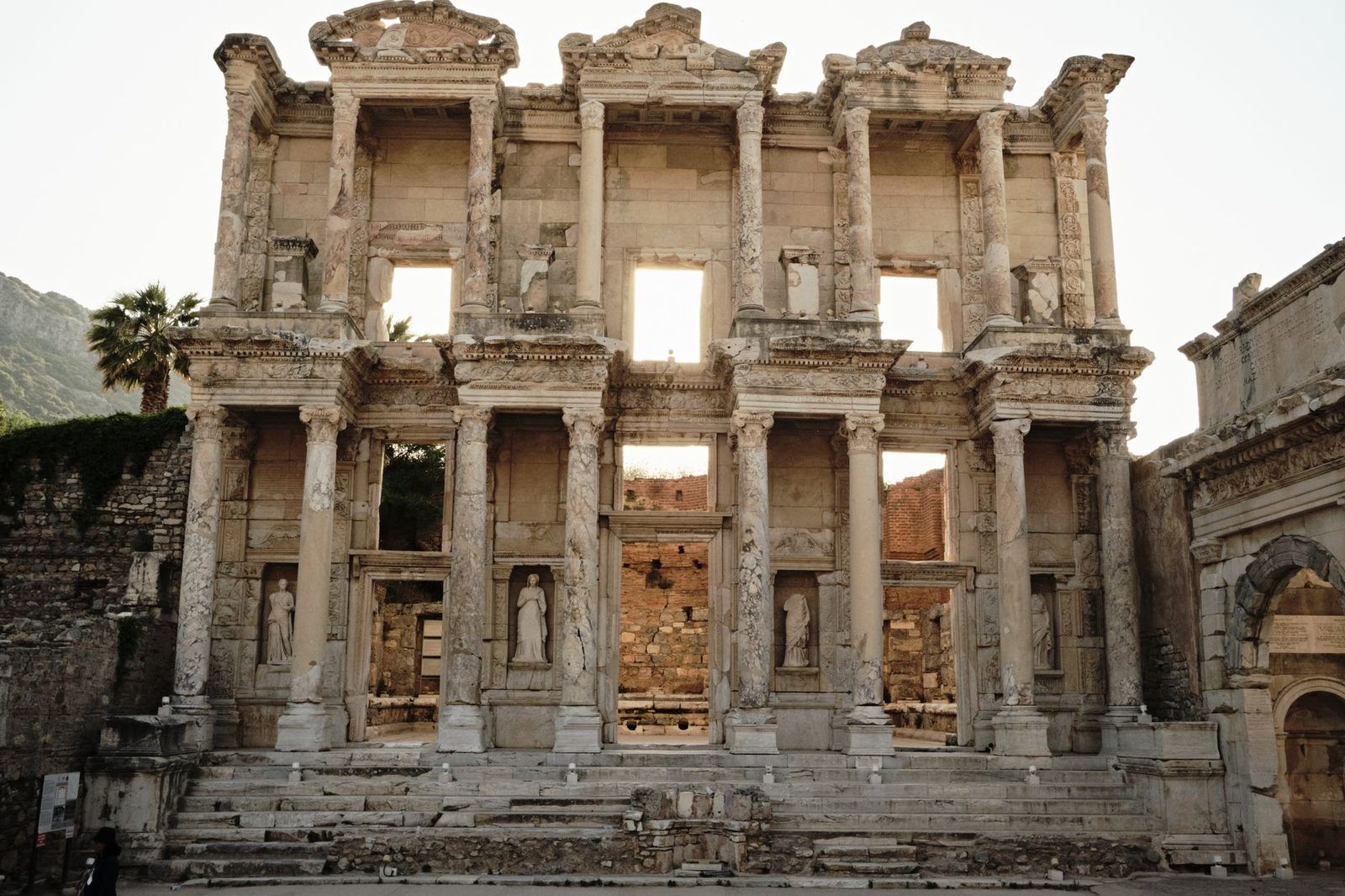
The ancient city of Ephesus shows you streets, theatres and façades, but many of the statues, frescoes and small everyday objects found there are no longer on site. A large share of them is displayed in the Ephesus Archaeological Museum in Selçuk, a short drive from the ruins. Here we explain what you will see inside, why the museum works best after your walk through the ancient city, and how to fit it into your day.
Where the museum is and why it matters
The Ephesus Archaeological Museum is in the centre of Selçuk, the small town next to the archaeological site. It is close to the Basilica of St. John and the İsa Bey Mosque, so it is easy to combine with other stops in town.
Excavations at Ephesus have gone on for well over a century. Fragile or valuable finds were moved off site to protect them. Some went abroad, notably to the Ephesos Museum in Vienna, but much of what was found in later decades stayed in Turkey and is now in Selçuk.
If you want to see what once stood in the fountains, houses and temples you walked past, this is the place.
What you will see inside
The museum is arranged by theme rather than strictly by date. The main highlights are below.
The statues of Artemis of Ephesus
The best-known exhibits are the marble statues of Artemis of Ephesus, the goddess whose great temple made the city famous across the ancient world. The most famous were found in the Prytaneion, the city’s administrative building. They are often called the “Great Artemis” and the “Beautiful Artemis”.
The Ephesian Artemis looks quite different from the Greek huntress of mythology. She stands stiffly upright, wearing a tall headdress and a robe decorated with animals and bees.
On her chest are rows of rounded shapes. Scholars have long debated what they represent, with suggestions including breasts, eggs and parts of sacrificed bulls, and there is no agreed answer. If you plan to visit the temple site as well, read our guide to the Temple of Artemis.
Finds from the Terrace Houses
The Terrace Houses on the slope above Curetes Street were homes of wealthy Ephesians in the Roman period. On site you can see their wall paintings and mosaic floors, but many smaller objects found inside are in the museum. Our guide to the Ephesus Terrace Houses explains what you see in the houses themselves.
Expect to see:
- Household items such as lamps, glassware, cooking pots and tableware
- Small figures in bronze and marble that once decorated rooms and courtyards
- Carved ivory and fragments of furniture decoration
- Religious objects connected with private worship at home
These everyday pieces give a more personal picture of Ephesus than the monumental ruins do. They show how people ate, lit their homes and decorated their living spaces.
Fountain sculptures and portrait busts
Ephesus had several large public fountains decorated with sculpture. The museum shows statue groups recovered from these fountains, including scenes from Greek myth.
There is also a large collection of portrait heads and busts, including members of Roman imperial families and local citizens. Several large fragments come from colossal imperial statues. The identification of some of these figures is debated, and the labels usually reflect current scholarly opinion.
The gladiator section
During excavations, archaeologists identified a gladiators’ cemetery near Ephesus. Study of the burials has taught researchers a lot about how gladiators lived, trained, were treated for injuries and died.
The museum has a section on this research, with grave reliefs and inscriptions that show gladiators with their equipment. It is one of the more unusual parts of the collection.
Coins and smaller treasures
The region around Ephesus is closely linked with the early history of coinage. The museum displays a collection of coins from early Greek issues through Roman and later times, along with jewellery, seals and other small finds. These cases are easy to rush past, but they repay a slower look.
Why visit the museum after the ancient city
We recommend seeing the museum after your walk through Ephesus rather than before:
- The objects make more sense. Once you have walked past the Terrace Houses and the fountains, you recognise where the finds came from.
- It fills in the gaps. The ancient city can feel like stone and outlines. The museum adds colour, faces and detail.
- It is indoors. The walk through Ephesus takes 2–3 hours at an easy pace, much of it in the sun. A shaded, indoor visit afterwards is a change of pace, especially in summer.
- Selçuk is on the way. After the Lower Gate, the route passes through Selçuk on the way to Şirince and back towards Kusadasi, so the museum fits naturally into the second half of the day.
How long to allow
Allow about an hour. This gives you time to see the Artemis statues, walk through the Terrace House and gladiator sections and look at the coins without hurrying. If you like to read every label, plan a little longer.
Combining the museum with other stops in Selçuk
All the optional stops in Selçuk are close together. A suggested order after you leave the Lower Gate:
- Ephesus Museum – about 1 hour
- Basilica of St. John – 30–45 minutes
- İsa Bey Mosque – 15–20 minutes, just below the basilica
- Temple of Artemis – 15–20 minutes, on the way out of town
You do not need to do all four. Choose the ones that interest you most and tell your driver. For more on the basilica and mosque, see our guide to the Basilica of St. John in Selçuk.
A sample day with the museum
For the Ephesus + House of the Virgin Mary + Şirince package, the day runs in this order:
- Pick-up in Kusadasi
- House of the Virgin Mary – 30–60 minutes
- Ephesus, from the Upper Gate down to the Lower Gate – 2–3 hours at an easy pace
- Ephesus Museum in Selçuk – about 1 hour
- Şirince – 1–1.5 hours
- Return to Kusadasi
Without Şirince, you return to Kusadasi after the museum. For ideas on spreading sights over several days, see Kusadasi in 1, 2 or 3 days.
Cruise passengers
If your all-aboard time leaves you less than about six hours ashore, keep to Ephesus only and leave the museum for another visit. Check your ship’s times on our Kusadasi cruise ship schedule and plan your day with our cruise passengers page. For the options for reaching the site, read how to get from Kusadasi cruise port to Ephesus.
Opening times and entry
Opening hours change; check them on the official museum website before your visit. For entry tickets, see our museum tickets page.
Adding the museum to your Ephesus trip
In every one of our Ephesus packages, the Ephesus Museum is available as an optional free stop. The same applies to the İsa Bey Mosque, the Basilica of St. John and the Temple of Artemis.
Our packages are:
- Ephesus only
- Ephesus + House of the Virgin Mary
- Ephesus + House of the Virgin Mary + Şirince
We pick you up from your Kusadasi hotel or from Kusadasi cruise port in a private car with driver.
The price is per vehicle for up to 8 people. Larger groups get a second vehicle.
Your driver drops you at the Upper Gate, you walk down through the ancient city, and the driver waits for you at the Lower Gate. From there it is a short drive into Selçuk for the museum.
Please note that this is a transfer only: guide and entrance tickets are not included.
Tickets
You can buy entry tickets for the Ephesus Museum, Ephesus and the Terrace Houses on our museum tickets page, for today or up to 7 days ahead. Payment is by card, and your ticket with its barcode is sent to you on WhatsApp. Each visitor needs to provide their full name, passport number and nationality. Please note that we are an independent seller, not the official ministry website, and tickets cannot be refunded once purchased.
Frequently asked questions
Is the Ephesus Museum the same as the ancient city?
No. The museum is in the town of Selçuk, a short drive from the archaeological site. It holds many of the finds excavated at Ephesus.
Is the museum worth visiting if I have already seen Ephesus?
Yes. It is most rewarding after the ancient city because it shows the statues, objects and details that are no longer on site.
How much time should I plan for the museum?
About an hour. Allow longer if you have a strong interest in archaeology.
Can I add the museum to a private transfer with you?
Yes. It is an optional free stop in all our Ephesus packages. Just tell your driver or mention it when you book.
Are museum tickets included in your Ephesus trips?
No. Our Ephesus trips are transfers only, so entrance tickets and guides are not included.
If you would like to see both the ancient city and its treasures in one relaxed day, book your private car to Ephesus and let us know you would like to stop at the museum. Cancellation is free up to 24 hours before, and you can pay in cash or by card.